Home / Pool screen repair
Pool screen repair in Port St. Lucie
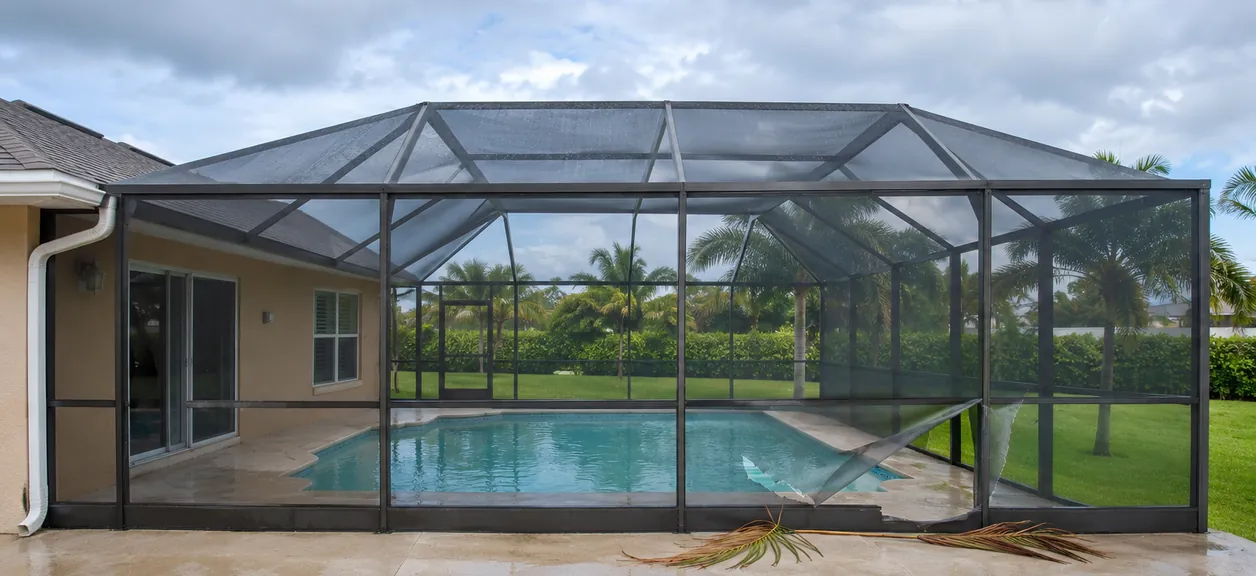
A torn panel lets in leaves, frogs and mosquitoes, and a loose one can tear the panels around it in the next storm. Send a request and a local contractor will call you about the repair.
- Torn or missing panels and popped splines
- Door closers, handles and kick plates
- Full pool cage rescreens
Common pool cage repairs
- Torn or blown-out panels: rescreened one at a time with matching mesh.
- Popped spline: the rubber cord that holds the mesh shrinks in the sun and lets go. New spline puts the panel back tight.
- Roof panels: the hardest to reach and often the first to fail. Working on a cage roof needs the right equipment, so leave it to the contractor.
- Doors: broken closers, latches and sagging screen doors.
- Frame damage: bent members or loose anchors after a storm or a fallen limb. These are structural and may need a permit.
After a storm
Take photos of the damage before anything is cleaned up, in case you file an insurance claim. Pool cages are sometimes covered and sometimes excluded or subject to a separate deductible, so check your policy. If any of the frame looks bent or the cage moves, keep people out of the pool area until it has been looked at.
Choosing the mesh
- Standard fiberglass (18x14): the common choice. Good airflow and a clear view.
- Small-insect or no-see-um (20x20): a tighter weave that keeps out the tiny biting midges common near water. It cuts airflow a little.
- Pet-resistant: a heavier vinyl-coated mesh that stands up to claws, often used on the lower panels only.
- Privacy and solar screens: denser weaves that block sun and the view in from neighbors, useful on west-facing lanais.
Before you sign with anyone
- Check the license. Aluminum screen enclosures in Florida are built by licensed contractors. You can look a contractor up on the state DBPR license search, and your county may keep its own list.
- Ask about the permit. New enclosures and structural repairs usually need a building permit, and the contractor normally pulls it. Simple rescreening often does not. Ask which applies to your job.
- Get the mesh in writing. The quote should name the mesh (standard, small-insect, pet-resistant or privacy), the number of panels and what happens to the old screen.
- Ask what the warranty covers. Workmanship and materials are often warranted separately, and storm damage usually is not.
How it works
Tell us about the job
Pick the kind of work and the area, and leave a phone number. It takes about a minute.
One contractor gets it
We pass your request to one screen contractor who works in your area. Not a list of five, and not a call center.
They call to set up an estimate
The contractor looks at the job, measures and quotes. You decide whether to go ahead, and you deal with them directly.
Questions about pool screens
Is a pool cage worth rescreening, or should I replace it?
If the frame is straight and the anchors are sound, rescreening is usually the better value. The contractor will check the frame first.
Will a few new panels match the rest?
New mesh is darker and crisper than old mesh, so it can stand out at first. Rescreening a whole wall or the whole cage avoids the patchwork look.
Do you do pool cages outside Port St. Lucie?
Yes. We take requests from Fort Pierce, Stuart, Jensen Beach, Palm City, Hobe Sound, Vero Beach and Sebastian too.
Guides
Rescreen or replace your screen enclosure?
Torn screen or a failing frame? A short walk-around tells you whether your Port St. Lucie screen enclosure needs a rescreen or real frame work.
Torn, sagging or faded screens?
Send one request and a local screen contractor calls you back.